Are You Ready for Heavy Weather?
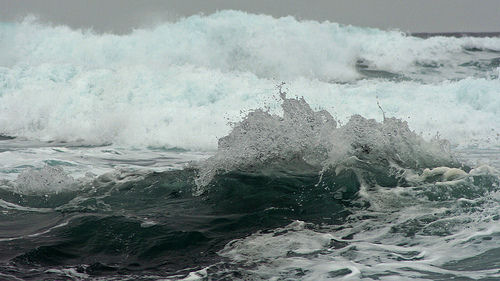 Preparation and education can keep you from enduring a life-threatening experience |
Clinging to his overturned 14-foot boat, the father desperately searched for his family. Seeing his wife behind him, clinging to their seven-year-old daughter and a loose seat cushion, he yelled, “Are you alright?” Then he scrambled around the stern to find his sons. There they were, treading water 15 or 20 feet away. They weren’t under the boat, thank God, but they weren’t wearing life jackets either – none of them were. It happened so fast. The day on the lake was perfect until a late afternoon squall popped up. With barely enough time to weigh anchor and make a dash for the marina, he ran too fast across the deep swells, buried his bow and flipped the boat, launching himself and his family overboard. In a vessel built for flat calm, he found himself in his first rough-water situation and he clearly wasn’t prepared for it.
Without a doubt, the best place for boaters to be when heavy weather strikes is back at the dock. But weather changes can happen fast, unexpected events can extend your voyage, and your first bad patch of sea is not the time or place to learn how to handle rough conditions.
Luckily for that family of five on Lake Maurepas, LA, they were close enough to shore to be seen, and a local game warden and the U.S. Coast Guard were only minutes away. The family was in the water less than 10 minutes when the rescue boat arrived. The skipper lost only his boat that day, and no one in his family was seriously injured.
But what else could that boat owner have done to be ready? Knowing the storm was coming is an obvious first step, but when I interviewed the experts it became clear: Success in foul weather isn’t just about paying attention to the weather. Staying calm and understanding your vessel’s limits as well as your own can make all the difference.
First Steps
There are some things you can, and should, do in all heavy-weather situations, no matter what kind of boat you own. They can make the difference between a lesson learned and one learned the hard way.
First, brief your passengers on the situation and have them stay low in the boat. They can’t slip and fall if they are sitting down and lowering the center of gravity of your vessel in bigger seas will help its stability.
Next, make sure all loose gear is secure and all openings (hatches, ports and windows) are closed. Then consider sending out a pan-pan radio call. A pan-pan alerts the U.S. Coast Guard, Sea Tow and other local authorities that you are in an urgent situation, but that there is no immediate danger to anyone’s life or the boat (in which case a mayday call would be initiated). Things can go wrong surprisingly fast out there; don’t wait for an accident to call for help. Those standing watch will hear your pan-pan and offer to help you get to a safe port.
Consider the possibility of heading to protected water nearby. If you have a small boat, can you safely beach the vessel until the storm passes? Should you make a move at all? If heading for the marina requires running in the trough or head on into the seas, perhaps trying to get back to the dock isn’t the safest choice. Simply “jogging in place,” by chugging ahead at a 45-degree angle to the swell – regardless of the direction that points the bow – and waiting might very well be the best course of action.
Proceed with Caution
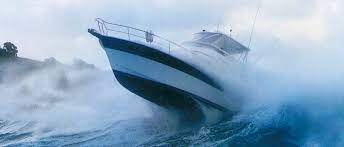
“One of the biggest mistakes boaters make when caught out in bad weather is they simply move too fast,” says Capt. Ethan Maass, owner of Sea Tow South Shore in Green Harbor, Mass. Pulling back and moving at the minimum possible speed immediately lowers the risk of capsizing and gives you time to assess your situation and take appropriate action.
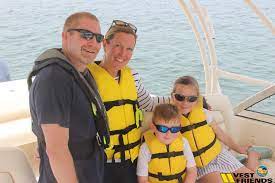
Everyone aboard should already be wearing life jackets. Besides their obvious benefits in the water, having some padding around the ribcage while being tossed around can also help prevent injuries.
“The next thing is to evaluate the situation and stay oriented,” Maass suggests. Rushing back to the dock can lead to other mistakes like missing (or hitting) channel markers, running aground, or simply putting your boat in a situation it (or you) can’t handle. “Slow down and consider your options,” he says.
Be Your Own Weatherman
It also pays to know what causes rough-water conditions in the first place. In addition to keeping an ear tuned to the radio for weather advisories, Steve Dashew, veteran cruiser and co-author (with his wife, Linda) of Surviving the Storm: Coastal & Offshore Tactics, recommends, “Spend some time learning about weather and how to make your own onboard forecasts.” Being able to forecast hostile weather and maneuver around them is always the best plan.
Know Your Boat
All boats aren’t created equally. Knowing the limits and handling characteristics of your particular vessel is best learned through experience. Husband-and-wife team Lin and Larry Pardey are experts at cruising in extremely heavy weather. Authors of the Storm Tactics Handbook, the couple believes that knowing your boat and how it behaves in rough seas is the number one way to keep your cool when surprised by bad weather.
Lin Pardey advises gradually increasing your comfort level in progressively harsher conditions before attempting any offshore voyage where rough seas are more likely to occur. “You need to get your sea legs first,” she says. “What Larry and I suggest to people is that you find 15 knots of sustained breeze and practice running your boat slowly, crosswise to the seas. Then do the same thing in 25 knots of wind, and more, depending on your vessel. That way, you’ll have an idea of how to move around in heavy weather.”
Additional Survival Tools
Offshore boaters can dramatically increase their confidence and peace of mind while motoring offshore with a comparatively modest investment in training and equipment. Speed limiting drogues are sea anchors that when tied to the stern, maintain your vessel’s alignment with the sea in a following sea. Should you need to take unexpected heavy weather on the stern, they limit the chances of your stern being pushed around by the swells and help prevent a broach.
Para-anchors, when effectively deployed, can be very useful in maintaining alignment to the sea should you lose power or just need a break until the weather passes. These rugged parachutes – rigged at an angle off the bow – can also help stabilize your boat in heavy weather.
The Pardeys set hove-to with a para-anchor off South Africa in 85-knot winds and 65-foot seas in a sailboat. “The boat rode beautifully,” Lin Pardey said. “It was just beautiful out there.” In the kind of seas and winds I have only heard about, they managed to be relaxed enough to enjoy the view – while getting much-needed rest and even a hot meal.
Buying a small para-anchor for your open-hulled 21-foot boat -- or even a large cruiser -- may seem unnecessary, but if your next heavy-weather moment is accompanied by an engine failure, having one and knowing how to use it will change your mind completely. And, while there are too many variables at sea to call any one tactic “the best,” these devices can only help you if you have them and know how to use them.
Know Your Limits
Dashew also says, “Personal skill sets are far more important than the hardware on the boat.”
The author of the must-read book Deep Survival, Laurence Gonzales, agrees. He writes, “The word ‘experienced’ often refers to someone who has gotten away with doing the wrong thing more frequently than you have.” Getting on a boat and taking it offshore without being physically and emotionally ready for heavy weather is definitely a wrong thing that boaters often get away with – but not always.
Seven years ago, the skipper who flipped his small boat in Lake Maurepas learned the hard way that he wasn’t ready to be out in a storm. His family survived but it would have been much better for everyone if he had been better prepared for his first exposure to rough conditions.
The point isn’t about knowing “the best thing” to do when caught out in heavy weather. Again, there are too many variables for absolutes. Just remember that bad weather happens. With a minimal investment in equipment and some practice in less-than-perfect conditions, you’ll be ready when the rough stuff rolls in, and you will make landfall the way you intended – in your own boat, not someone else’s.
Small Craft Advisories
If you only think about the weather when the National Weather Service sends a warning, you may be thinking about it too late. Small craft advisories are issued for different conditions depending on your location. In Louisiana, for example, small craft advisories are issued when winds are expected to exceed 20 to 33 knots and/or seas are expected to be above seven feet for more than two hours. So, the late afternoon squall that churned up the lake that day didn’t trigger such a warning; that doesn’t mean that the storm came out of nowhere.
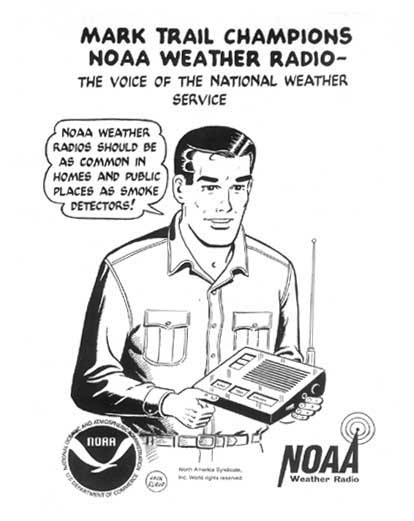
A quick look at the Weather Channel can be all it takes to stay informed of impending bad weather but checking NOAA’s Weather Radio broadcast for your area is a must before any trip on the water. With detailed information on winds, sea states, currents and water temperatures, these continually updated weather broadcasts provide detailed information that boaters should be aware of before heading out. Stay informed about the conditions you might face and balance them against the limits of your boat and your crew. For more information on marine broadcasts, coastal weather and hazardous weather outlooks, visit noaa.gov.
This article has been brought to you by SeaTow.