Anchoring Basics
One of our favorite sports while on the hook, sipping a cold one in the cockpit in the afternoon is to watch the boaters come in and anchor. It certainly beats anything on TV, as first one person then another circles around looking for the perfect spot then puts out 2:1 scope, only to be scrambling to the bow 15 minutes later. Anchoring is really easy once you have a few basic steps down. If you'd like to put your mind at ease the next time you go cruising, just follow our six basic steps of anchoring...
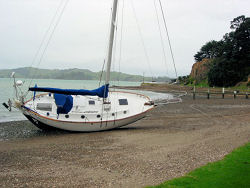
Blow boaters talk a good story at the bar, but don't let them fool you, they are as prone to anchoring mistakes as anyone else.
1. Choosing your Location<?xml namespace="" ns="urn:schemas-microsoft-com:office:office" prefix="o" ?>
When it’s time to drop an anchor try and choose a location that’s as protected as possible if you intend to overnight. Keep in mind the amount of room your boat will need to swing between other boats or objects near by. Remember, the more scope you let out, the further you will swing.
2. Plan your Scope
Scope is the ratio of anchor rode (chain or line or a combination of both), payed out to the depth of the water where you dropped your anchor. A typical anchoring scope is 5:1 to 7:1 depending on the conditions you expect. If you are in saltwater, calculate the tide rise and fall. If you are anchoring at low tide in 10 feet of water where the tide rise is 10 feet at high tide, figure your depth at 20 feet. Add the distance from your bow to the waterline. In this example, let’s say it is 5 feet. That means your total "depth" is 25'. You will want to put out 5 to 7 times 25 feet of rode, or 125 to 175 feet. This should all be pre-calculated before you drop anchor.
3. Head the boat into the wind or the current
Once you’ve scouted out your anchoring spot, know its depth, know where you are in the tide fall, and have pre-calculated how much scope you want to let out, turn the boat into the wind, or the current, whichever is stronger. Proceed to the spot you have decided to drop your anchor. Stop the forward momentum of your boat when you are over your anchoring spot.
4. Lowering the Anchor
If you are lowering the anchor by hand make sure nothing is in the way of the anchor rode. Do not toss over the anchor with a hand full of line as this might foul the anchor. Lower it quickly but carefully. If you are using a windlass make sure the locking mechanism is free, your safety clip is off and nothing is in the way of the chain. Now, make sure the boat is slowly drifting astern. Note when you feel the anchor hit bottom, then move your gears in and out of reverse to put on some stern way. As you continue to back down let out more line keeping in mind the amount of scope you want for your anchoring spot and conditions. When about half of your scope is out, briefly snub your line or chain to aid the anchor in digging in. Continue to back down while paying out the rest of your scope.
5. Setting the Anchor
Once you have payed out all of your predetermined scope, put your boat into neutral and cleat off the line or affix the chain. Now, set the anchor by slowly backing down. This is probably the part that takes the most practice, as it is easy to back down too hard and -- depending on the bottom conditions -- pull your anchor out. When your anchor is set there should be a fair amount of tension on the rode when your boat is lightly in reverse.
6. Take a Bearing
Once you have set the anchor and feel the boat is secure, it’s important to take a bearing on a fixed object on shore to make sure you are not dragging. Find an object on shore, such as a tree, which is abeam of the boat. Line up the tree with something as far away as possible on the boat, such as a VHF antenna, and sight across the antenna to the tree. Then put your engine in reverse. Does the object on land move forward relative to your antenna? If it does, then your anchor is not set, and you must start at square one. On the other hand, if you have the boat in reverse and the bearing of the tree remains constant, your anchor is set.
Don't Be Too Proud to Try Again
Perhaps the biggest mistake you can make is to be embarrassed by what you don't know and hope for the best. If your bearing moves forward when you are in light reverse, your anchor is not set and you must try again. It happens all of the time to veteran yachtsmen -- even to rag baggers! We have seen veteran offshore sail boat racers try three or four times before they finally got an anchor set. Usually this happens because the bottom is hard or grassy.
Obviously there is much more to know about anchoring than we have published here, such as what kind of anchor to use, how heavy it should be, how much chain or line or both you should have and many more details. These six basic steps should take out some of the mystery. Next, find a good seamanship book that has a chapter on anchoring. Like most things in boating, good anchoring is a matter of experience. Do not hesitate to practice.